

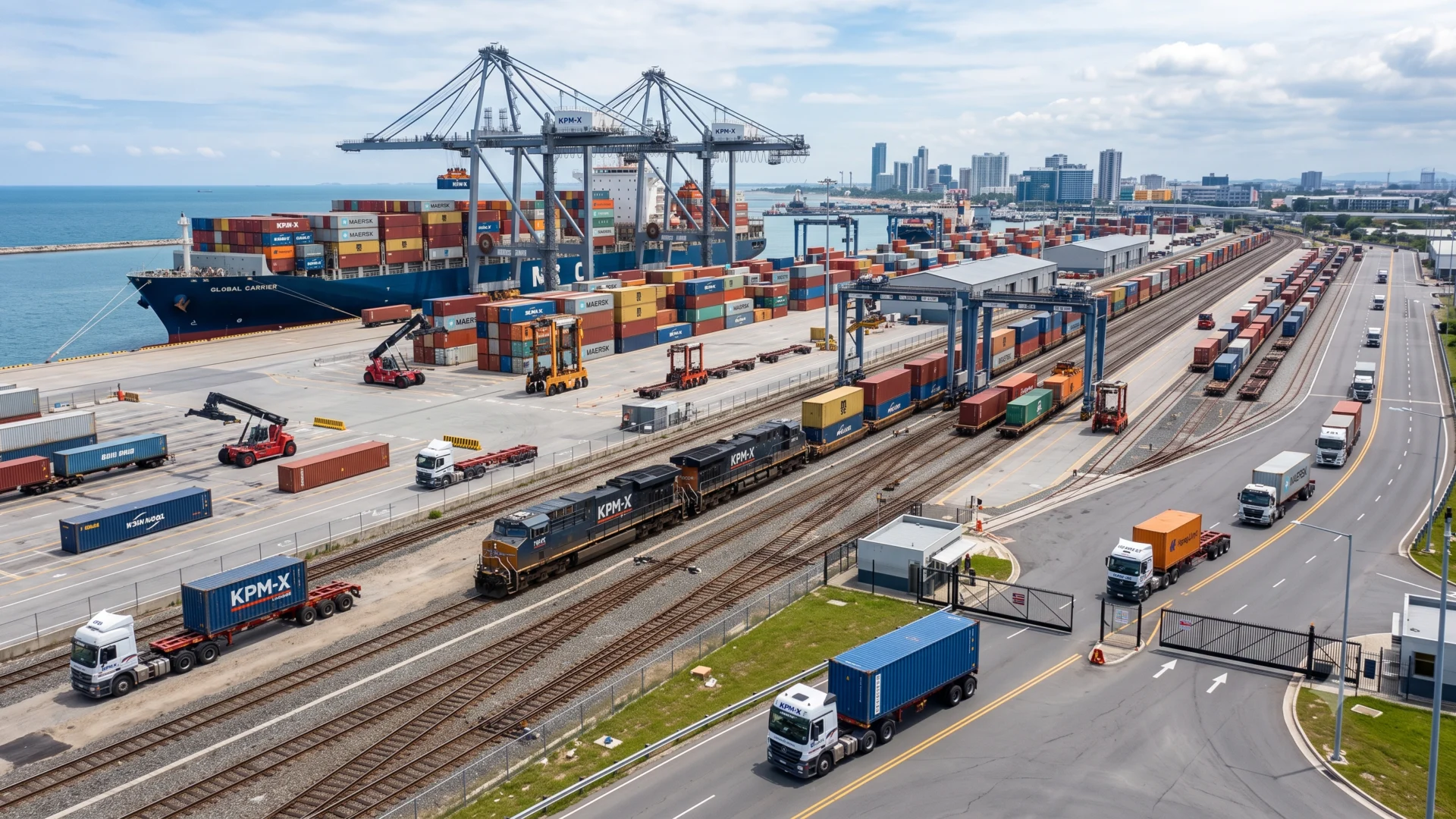
Modern supply chains require a delicate balance between transit times, environmental impact, and overall logistics expenditures. For enterprises managing complex international trade corridors, relying on a single mode of transport is rarely the most efficient path forward. Intermodal transportation offers a strategic solution by seamlessly combining multiple transport methods—typically rail, road, and ocean freight—under a unified logistics strategy to move goods from origin to destination in standardized containers.
By leveraging the specific strengths of different transport modes, businesses can navigate capacity constraints, mitigate driver shortages, and lower their carbon footprints. This approach allows cargo to move efficiently across continents, transitioning from maritime vessels to rail networks, and finally to local road transport for final-mile delivery, all without handling the freight itself during transfer points.
Key Takeaways
- Enhanced Efficiency: Combines the long-haul cost advantages of rail or ocean with the flexible, door-to-door precision of road transport.
- Reduced Environmental Impact: Utilizing rail for overland segments significantly lowers greenhouse gas emissions compared to long-haul trucking.
- Risk Mitigation: Diversifying transport modes buffers supply chains against driver shortages, highway congestion, and sudden fuel price spikes.
- Container Standardization: Eliminates the need to unpack and repack cargo at transfer hubs, lowering the risk of cargo damage or theft.
The Strategic Role of Intermodal Logistics
In international logistics, cargo movement is rarely a straightforward journey from point A to point B. Intermodal shipping addresses this complexity by using standardized ISO containers that fit seamlessly onto container ships, specialized railcars, and highway chassis. This standardization is the backbone of global trade, allowing for rapid transfers between different infrastructure networks.
When planning transit routes, logistics managers often evaluate the trade-offs between speed and cost. While air freight offers rapid delivery, its cost can be restrictive for high-volume or heavy commodities. Conversely, pure road transport provides excellent geographical reach but becomes highly expensive and operationally challenging over continental distances. Intermodal transportation bridges this gap, offering a reliable middle ground that optimizes both budget and schedule.
Optimizing the Journey: How Intermodal Routing Works
The execution of a successful intermodal strategy relies on precise scheduling and robust infrastructure. A typical import journey illustrates the operational flow of this method:
1. Ocean Transit and Port Handling
The journey frequently begins at an international port, where container ships transport massive volumes of goods across ocean corridors. Upon arrival at a major maritime gateway, harbor cranes unload the standardized containers directly onto port terminal yards, preparing them for the next leg of transport.
2. Rail Integration for the Long Haul
Once cleared, the containers are transferred to specialized railcars. Rail transport serves as the heavy-duty engine of intermodal logistics, capable of moving hundreds of containers across thousands of miles with exceptional fuel efficiency. This segment bypasses highway congestion and reduces reliance on long-haul truck drivers.
3. The Final Mile via Road Freight
As the train reaches an inland intermodal terminal, the container is lifted onto a truck chassis. A local driver then handles the regional distribution, delivering the container directly to a warehouse, distribution center, or final retail destination. This final-mile delivery relies on the flexibility of road transport to navigate local logistics parks and urban centers.
Operational Insight: Businesses often choose intermodal transport when shipping goods over distances exceeding 500 miles. At this threshold, the fuel savings and cost efficiencies of rail transport begin to heavily outweigh the initial coordination and transfer times at intermodal hubs.
Enhancing Supply Chain Resilience and Compliance
Managing risk is a primary concern for modern supply chain directors. Relying entirely on road freight exposes cargo to weather disruptions, highway construction, driver availability fluctuations, and volatile fuel surcharges. Integrating rail corridors into the routing strategy introduces a level of predictability that is highly valuable for inventory planning.
Furthermore, international customs compliance and trade regulations require meticulous documentation, regardless of the transport modes used. Standardized intermodal containers simplify customs procedures at international borders, as the cargo remains sealed throughout its journey. This sealing reduces administrative friction, minimizes cargo handling, and significantly lowers the likelihood of transit delays or security breaches at border checkpoints.
Selecting the Right Strategy for Your Freight
Implementing an effective intermodal strategy requires careful analysis of cargo characteristics, delivery timelines, and destination infrastructure. For high-value, time-sensitive electronics, a combination of air and road transport may be necessary. However, for consumer goods, industrial components, and automotive parts, the combination of ocean, rail, and road represents the ideal balance of cost control and reliable delivery planning.
By partnering with experienced logistics providers who maintain deep relationships with rail networks, port authorities, and regional drayage fleets, businesses can secure the visibility and flexibility needed to thrive in today’s competitive global marketplace.